Insurance Declarations Page: How to Read Every Section

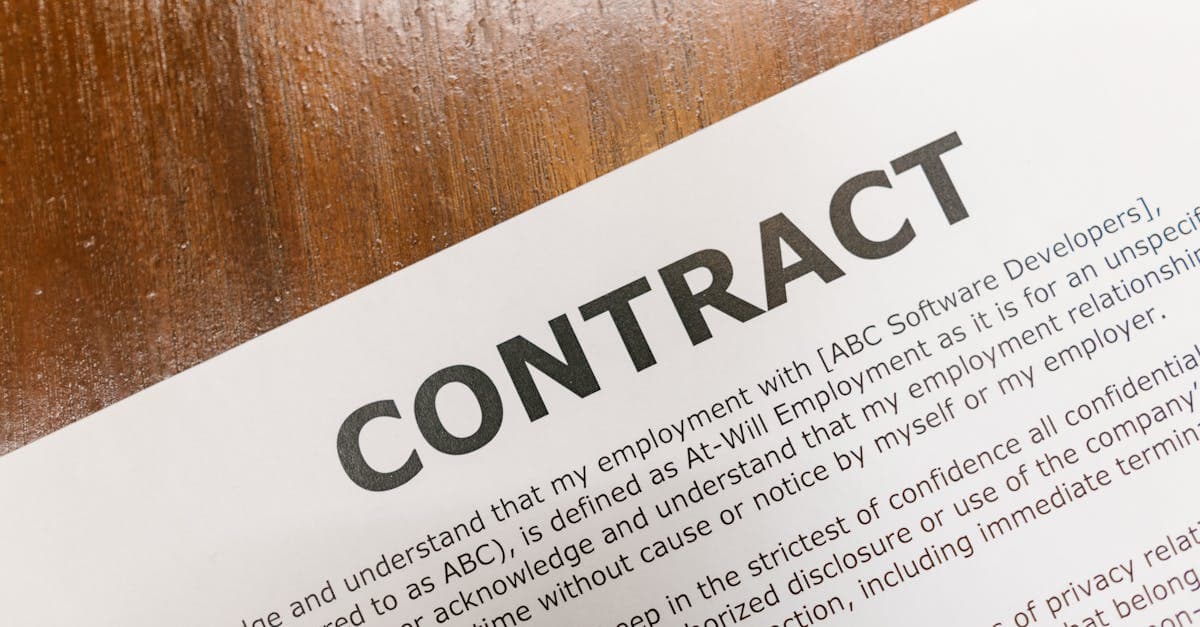
Let's talk about a document that most policyholders file away without reading — and it happens to be the most important page in your entire policy. A declarations page — commonly called a "dec page" — is your master map showing every route your coverage takes. It is the summary page at the front of every insurance policy that lists the essential facts about your coverage in a standardized, easy-to-reference format.
The declarations page is not the policy itself. It is the executive summary. While your full policy runs dozens or even hundreds of pages of legal language, conditions, and exclusions, the declarations page distills all of that into one or two pages of critical data: who is insured, what is covered, how much coverage you have, what your deductibles are, when the policy is in effect, and what you are paying.
Every insurance policy issued in the United States includes a declarations page — auto, homeowners, renters, health, life, business, umbrella, and specialty lines. The format varies by insurer and by coverage type, but the core information is always present. It is the first document an adjuster reviews when you file a claim, the first page an agent examines when quoting a competing policy, and the first record a lender requests when verifying your coverage.
If you have never read your declarations page, you are not alone. But if you want to understand what you are actually paying for and what your insurance will actually do when you need it, the declarations page is where you start. Every number on that page has a direct impact on your financial protection, and this guide will show you exactly what each one means.
What Exactly Is a Declarations Page?
Here is the thing though — The declarations page — universally abbreviated as the "dec page" — is your master map showing every route your coverage takes. It is the opening page or pages of any insurance policy that lists the factual details of your coverage in a structured, standardized format.
What it is: A summary document that identifies the policyholder, describes the insured property or risk, lists every coverage with its corresponding limit, states the deductible for each coverage, shows the premium breakdown, and specifies the policy period.
What it is not: The declarations page is not the policy itself. It does not contain the terms, conditions, exclusions, or definitions that govern how the policy works. Those are in the body of the policy contract. The declarations page tells you what your coverage looks like. The policy tells you how it works.
Why it matters: The declarations page is a legally binding component of your insurance contract. The information on it takes precedence in most coverage disputes. If your dec page says your coverage limit is $300,000, that number controls — even if you verbally discussed a different amount with your agent.
Who uses it: Everyone involved in your insurance interacts with the declarations page. Claims adjusters check it first when processing a claim. Mortgage companies require it to verify coverage on your home. Landlords may request it as proof of renters insurance. Other drivers' attorneys may reference it in accident disputes. And your own insurance agent uses it as the baseline for every policy review.
The practical reality: Your declarations page is the single most useful document in your entire insurance portfolio. Learning to read it takes less time than reading this section, and the knowledge serves you for every policy you will ever own.
Property and Vehicle Details: Getting the Facts Right
Let me put it another way. Your declarations page identifies every piece of property or vehicle covered by your policy. Errors in this section are among the most common and most consequential on any dec page.
Homeowners property details: Your dec page lists the property address, and often includes details about the dwelling — construction type, year built, square footage, number of stories, roof type, and foundation type. These details affect your coverage and your premium. An incorrect construction type or roof age can change your rates significantly.
Auto vehicle details: Every insured vehicle is listed with its year, make, model, body style, and Vehicle Identification Number (VIN). The VIN is the most critical entry — it is the unique identifier that connects your coverage to a specific vehicle. A transposed digit in the VIN can mean your vehicle is technically uninsured.
Why property details matter for claims: When you file a homeowners claim, the adjuster verifies that the damaged property matches what is described on the dec page. If your dec page lists a single-story frame home and your home is actually a two-story brick structure, the discrepancy will raise questions. While most errors are correctable, they create delays and administrative complications during an already stressful process.
Vehicle additions and removals: When you buy a new car, it must be added to your declarations page. When you sell one, it must be removed. Most policies provide a short grace period (typically 14 to 30 days) for adding newly acquired vehicles, but you should update your dec page as soon as possible to avoid any coverage questions.
Scheduled personal property: High-value items like jewelry, art, firearms, musical instruments, and collectibles may be individually listed on your dec page with appraised values. This "scheduling" provides broader coverage and higher limits than the standard policy sublimits.
What to verify: Check every address, every VIN, every property description. Compare the details to reality. If your roof was replaced last year, verify that the dec page reflects the new roof year. If you moved, verify the new address. These details drive both your coverage and your premium.
Declarations Page Glossary: Key Terms Defined
Understanding the terminology on your declarations page eliminates confusion and helps you communicate effectively with your insurer. Here are the most common terms.
Named Insured: The person or entity identified by name on the policy and declarations page. Has the broadest rights under the policy.
Additional Insured: A person or entity added to the policy for specific coverage purposes. Has narrower rights than the named insured.
Additional Interest: A party that has a financial interest in the insured property, such as a mortgage company. They receive notifications about policy changes but are not covered by the policy.
Policy Period: The dates between which coverage is active. Also called the "term" of the policy.
Effective Date: The date coverage begins.
Expiration Date: The date coverage ends.
Coverage Limit / Limit of Liability: The maximum amount the insurer will pay for a covered loss under a specific coverage.
Deductible: The amount the policyholder pays out of pocket before insurance coverage applies.
Premium: The cost of the insurance policy for the policy period.
Endorsement / Rider: A modification to the base policy that adds, removes, or changes coverage.
Peril: A cause of loss, such as fire, theft, windstorm, or water damage.
Dwelling Coverage (Coverage A): On homeowners policies, the coverage for the physical structure of the home.
Other Structures (Coverage B): Coverage for structures not attached to the main dwelling, like a detached garage or fence.
Personal Property (Coverage C): Coverage for the policyholder's belongings.
Loss of Use (Coverage D): Coverage for additional living expenses if the home is uninhabitable due to a covered loss.
Liability (Coverage E/F): Protection against claims from third parties for bodily injury or property damage.
Actual Cash Value (ACV): Replacement cost minus depreciation.
Replacement Cost Value (RCV): The cost to replace or repair damaged property without deducting for depreciation.
Mortgagee Clause: The section identifying the mortgage lender as a party with interest in the property and the policy.
Using Your Declarations Page as Proof of Insurance
So what does this mean for you? Your declarations page is one of the most widely accepted forms of proof of insurance. Understanding when and how to use it saves time and satisfies requirements across many situations.
Mortgage requirements: When you buy a home, your mortgage lender requires proof that the property is insured. The declarations page is the standard document for this purpose. The lender specifically looks for the property address, dwelling coverage amount (which must meet or exceed the loan amount), the named insured, and the mortgagee clause naming the lender as an interested party.
Rental applications: Landlords often require proof of renters insurance before allowing tenants to move in. Your renters insurance declarations page satisfies this requirement. Some landlords also require being listed as an additional interest, which would appear on the dec page.
Vehicle registration and legal compliance: While an insurance ID card is the most common proof of auto insurance, your auto declarations page is also accepted by DMVs, law enforcement, and courts. It provides more detailed coverage information than the ID card.
Business contracts: Many business contracts require proof of insurance — general liability, professional liability, workers compensation. The declarations page, along with a certificate of insurance, is the standard documentation package.
Legal proceedings: In lawsuits and insurance disputes, the declarations page serves as primary evidence of coverage. Attorneys on both sides reference it to establish what was covered, to what extent, and under what terms.
What makes a dec page valid as proof:
- It must be current (within the active policy period)
- It must show the required coverage types and limits
- It must correctly identify the insured party
- It should include the insurer's name and policy number
What it does not replace: A declarations page is not a certificate of insurance (COI), which is a separate document specifically designed for third-party verification. Some situations require a COI instead of or in addition to the dec page. Your agent can issue a COI upon request.
Red Flags on Your Declarations Page
Now, this is where it gets interesting. Certain entries on your declarations page should trigger immediate attention. These red flags can indicate errors, coverage problems, or issues that need resolution before a claim occurs.
Coverage limits that seem too low: If your dwelling coverage is significantly below what it would cost to rebuild your home, you may be underinsured. Construction costs have risen dramatically, and coverage that was adequate five years ago may be insufficient today.
Deductibles you do not recognize: If your deductible is higher than you remember choosing, or if a percentage deductible appears that you did not expect, investigate immediately. Deductible surprises at claim time are devastating.
Missing endorsements: If you requested specific coverage additions — water backup, scheduled jewelry, identity theft protection — and they do not appear on the endorsement list, they are not on your policy. Follow up with your agent.
Wrong named insured: If your name is misspelled, your legal name has changed, or a named insured who should be on the policy is missing, correct it immediately. This can affect your ability to file claims and receive payments.
Incorrect property or vehicle details: Wrong addresses, incorrect VINs, outdated property descriptions — any of these can complicate claims or indicate that your coverage is not accurately rated.
Unexplained premium changes: A significant premium increase or decrease without a corresponding change in coverage deserves investigation. The change might be legitimate (a market rate adjustment), but it could also indicate an error in your rating information.
Coverage that was reduced without request: If a coverage limit decreased from last year's dec page and you did not request the change, ask why. Some insurers reduce limits as part of renewal adjustments, and you have the right to understand and contest the change.
Policy form changes: If the policy form numbers on your dec page changed at renewal, the terms and conditions of your coverage may have changed too. Ask your agent to explain any form changes and how they affect your protection.
The bottom line: Trust your declarations page as a factual document, but verify it against your expectations. When something does not look right, it probably is not right. Act quickly, and insist on written corrections.
The Premium Breakdown: Where Your Money Goes
Here is the thing though — Your declarations page does not just show the total premium — many dec pages break it down by coverage type, giving you a clear picture of how your insurance dollar is allocated.
Total premium: The bottom-line number you pay for the policy period. This may be shown as an annual amount, a semi-annual amount, or a monthly equivalent depending on your billing arrangement.
Coverage-level premiums: Many dec pages show what you pay for each coverage individually. On a homeowners policy, you might see separate premium amounts for dwelling coverage, personal property, liability, medical payments, and additional living expenses. This breakdown reveals which coverages drive your overall cost.
Why the breakdown matters: Understanding your premium allocation helps you make informed decisions at renewal. If 60 percent of your homeowners premium goes to dwelling coverage, increasing your dwelling deductible will have the largest impact on your total cost. If liability coverage is a small fraction, increasing that limit is often very affordable.
Endorsement premiums: Each endorsement (add-on coverage) has its own premium, which may be listed separately on the dec page. Scheduled jewelry coverage, water backup coverage, or identity theft protection each add a specific amount to your total premium.
Discounts applied: Some dec pages show the discounts that have been applied to your premium — multi-policy bundling, claims-free credits, home security system discounts, or paperless billing savings. If you expected a discount that is not reflected, the dec page is where you will notice it.
Premium changes at renewal: When you receive your renewal dec page, compare the premium breakdown to last year's version. Changes in individual coverage premiums reveal exactly where costs increased or decreased. A $200 overall increase might come entirely from dwelling coverage, or it might be spread across multiple lines. The breakdown tells you where to focus your review.
Payment schedule: Some dec pages include the payment plan details — how many installments, the amount of each payment, and any installment fees. Verify this matches your billing preference.
Your Declarations Page Action Plan
Understanding your declarations page is only valuable if it leads to action. Here is your step-by-step plan for making the most of this essential document.
This week:
- Locate the declarations page for every insurance policy you own — auto, home or renters, life, health, umbrella, and any specialty coverage
- Read each one from top to bottom using the walkthrough method described in this guide
- Create an insurance inventory listing every policy, its key details, and where the dec page is stored
This month: 4. Verify the accuracy of every entry — names, addresses, VINs, property details, coverage limits, deductibles 5. Compare your coverage limits to your current assets and liabilities to ensure adequate protection 6. Contact your agent about any errors, gaps, or questions that arise from your review
At your next renewal: 7. Compare the renewal dec page to the expiring one line by line 8. Question any changes you did not request or expect 9. Use your current dec page to request competitive quotes from other insurers 10. Set a calendar reminder to repeat this review at every future renewal
Your declarations page is the compass bearing that keeps you on course. Read it, verify it, and keep it accessible. That single practice gives you more control over your insurance than any other action you can take as a policyholder.
If you want a section-by-section reference while you do this, Truscott's guide to what's on a home insurance declarations page walks through each line.
Continue reading

How to Compare Insurance Quotes the Right Way: A Complete Guide
Comparing insurance quotes on price alone is a common and costly mistake. This guide walks through every element you should evaluate to find the policy that delivers the best value for your specific situation.
When Should You Get a Policy Checkup? A Complete Timing Guide
Your insurance needs change as your life changes. A policy checkup ensures your coverage keeps pace with new risks, assets, and responsibilities. This guide explains when and how to review your policies.

What Is Assignment of Benefits in Insurance? A Complete Guide
Assignment of benefits lets you transfer your insurance claim rights to a third party like a contractor. This guide explains how AOB works, when it helps, and when it can backfire.