What Is Full Coverage Car Insurance? The Truth Behind the Term

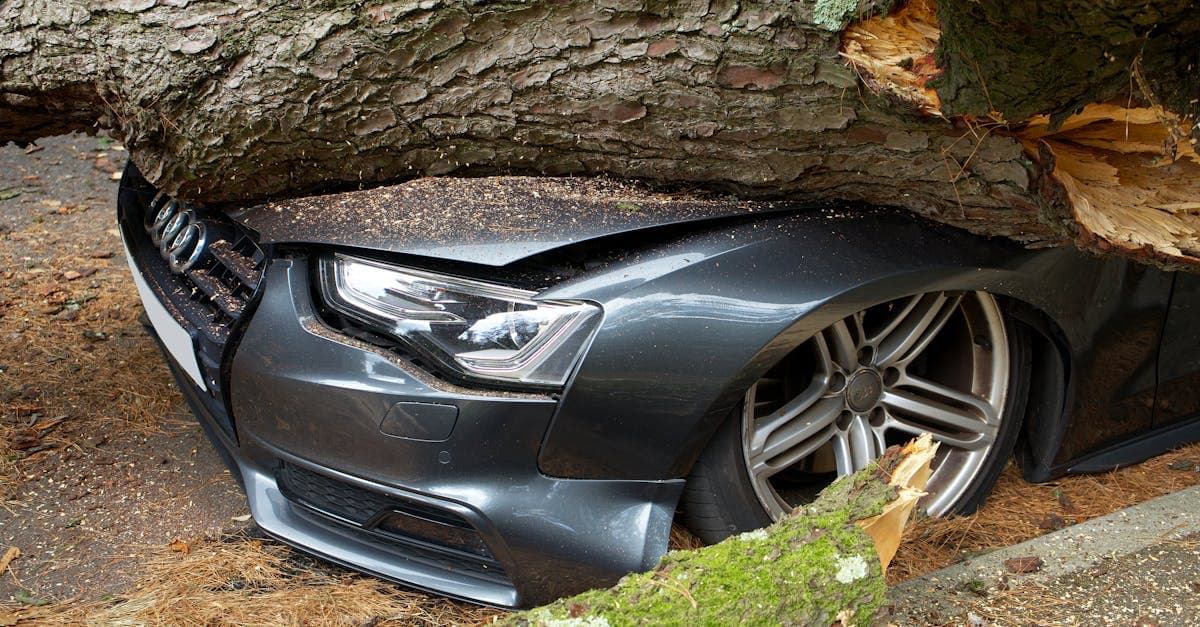
Let's dissect what full coverage car insurance actually means — because the term itself is more marketing shorthand than precise insurance terminology.
The phrase full coverage creates a dangerous illusion of total protection. In reality, the difference between a full set of navigational charts and one missing the waters where you actually sail rarely exists in any insurance policy. What most people call full coverage is simply liability plus collision plus comprehensive — three important coverage types that still leave significant gaps in your overall protection.
Consider what this standard full coverage package doesn't include: uninsured motorist coverage (protecting you from drivers with no insurance), gap insurance (covering the difference between your car's value and your loan balance), rental reimbursement (keeping you mobile during repairs), medical payments (covering your health costs regardless of fault), or roadside assistance. Each of these omissions represents a real scenario where your so-called full coverage would leave you paying out of pocket.
Understanding this reality isn't meant to frighten you — it's meant to empower you. Once you recognize that full coverage is a starting point rather than an endpoint, you can build intentional, comprehensive protection that genuinely matches your risks rather than relying on a comforting but misleading label.
What Full Coverage Actually Means: The Standard Definition
Here is the thing though —,Now, this is where it gets interesting.,So what does this mean for you?,Let me put it another way., let's establish exactly what most people and insurers mean by full coverage. The standard definition includes three the multiple instruments — compass, radar, sonar, GPS — that together provide complete situational awareness of protection that together provide broader coverage than a bare-minimum policy.
Liability coverage (the legal requirement): This pays for injuries and property damage you cause to others. It's the only coverage required by law in most states. Within full coverage, liability forms the base layer — it protects your assets from lawsuits but doesn't do anything for your own vehicle or injuries.
Collision coverage (your vehicle in accidents): This pays to repair or replace your vehicle after you hit another car, object, or your vehicle rolls over. It applies regardless of fault, meaning you can use it even when you caused the accident. The payout is limited to your vehicle's actual cash value minus your chosen deductible.
Comprehensive coverage (everything else that can damage your car): This covers non-collision damage — theft, vandalism, fire, weather events, falling objects, animal strikes, and civil disturbance. Like collision, it pays up to actual cash value minus deductible. Together with collision, it ensures your vehicle is protected against virtually any physical damage scenario.
The combination's limitation: While these three coverages together address both your liability to others and physical damage to your vehicle, they leave notable gaps in protection for your own body (medical costs), your transportation (rental needs), your financial obligations (loan gaps), and risks from other drivers (uninsured motorists). Understanding these specific limitations is essential to building genuine comprehensive protection.
Rental Reimbursement: The Mobility Gap in Full Coverage
Here is the thing though —,Now, this is where it gets interesting.,So what does this mean for you?,Let me put it another way., when your car is in the shop after an accident, full coverage pays for repairs — but without rental reimbursement, it doesn't provide alternative transportation. This the uncharted reefs that can sink your financial ship despite having most of the navigation tools aboard in mobility can cost $500-2,000+ out of pocket during repair periods.
The transportation need: Average collision repair takes 12-15 days. During this time, you still need to get to work, pick up children, buy groceries, and handle daily life. Without rental reimbursement coverage, you'll pay $30-80 per day for a rental car — totaling $360-1,200 for an average repair timeline. Complex repairs or parts delays can extend this to three weeks or more.
What rental reimbursement covers: This coverage pays for a rental vehicle (or sometimes ride-sharing costs) while your car is being repaired after a covered claim. Limits are typically expressed as a daily maximum ($30-75/day) and a total maximum ($900-2,250 per claim). Some policies also cover rental costs when your vehicle is stolen until it's recovered or the claim is settled.
The cost of adding rental reimbursement: Rental reimbursement typically costs $2-5 per month — $24-60 per year. Given that a single claim requiring two weeks of rental could cost $600-1,000 without coverage, this is among the most cost-effective add-ons available. The annual premium is a fraction of a single rental period's cost.
When to consider it essential: Rental reimbursement is particularly important for: single-car households with no backup transportation, people who cannot use public transit for work, families where the covered vehicle is the primary transportation for children, and anyone who lives in a car-dependent area where alternative transportation is impractical or unavailable.
When to Reduce or Drop Full Coverage: The Transition Decision
Here is the thing though —,Now, this is where it gets interesting.,So what does this mean for you?,Let me put it another way., maintaining the multiple instruments — compass, radar, sonar, GPS — that together provide complete situational awareness of full physical damage coverage indefinitely isn't always financially optimal. Understanding when to reduce coverage — and how to do it safely — prevents both overpaying and premature exposure.
The depreciation trigger: When your vehicle's value drops to the point where annual collision and comprehensive premiums exceed 10-15% of the car's value, full physical damage coverage becomes questionable. For a car worth $4,000 with $500/year in collision/comprehensive premiums, you're paying 12.5% of the asset's value annually. Over four years without a claim, you'd pay more in premiums than the maximum possible payout.
The self-insurance test: Before dropping collision and comprehensive, ask: "Could I replace this vehicle from savings without financial hardship?" If yes, self-insuring (dropping physical damage coverage and banking the premium savings) may be rational. If no — if losing the car would force you into debt or prevent you from working — maintain coverage regardless of the math.
The gradual approach: Rather than dropping coverage entirely, consider increasing deductibles first. Moving from a $500 to a $2,000 deductible dramatically reduces your premium while maintaining coverage for larger losses. This middle ground provides catastrophic protection (a $15,000 total loss minus $2,000 deductible = $13,000 payout) at reduced cost.
What to never drop: Regardless of vehicle age or value, maintain: adequate liability coverage (protects your assets), uninsured motorist coverage (protects your health), and medical payments (covers accident injuries). These coverages protect you — not your vehicle — and their value doesn't depreciate with your car's age. Only collision and comprehensive should be evaluated against vehicle depreciation.
Full Coverage for Senior Drivers: Adapting Protection as You Age
Here is the thing though —,Now, this is where it gets interesting.,So what does this mean for you?,Let me put it another way., senior drivers face unique insurance considerations that affect both the cost and the the difference between a full set of navigational charts and one missing the waters where you actually sail of their full coverage. Understanding these factors helps older drivers maintain appropriate protection without overpaying.
How age affects full coverage rates: Premiums typically reach their lowest point in the 50s-60s (peak experience with declining mileage). After 65-70, rates begin increasing again as accident risk rises due to slower reaction times, vision changes, and increased injury severity. These increases are gradual but meaningful — a 75-year-old may pay 20-40% more than a 55-year-old for identical coverage.
Coverage adjustments for retirement: Retired drivers often need less coverage in some areas and more in others. Reduced mileage may warrant lower premiums through mileage-based discounts. Vehicles may be paid off, making collision/comprehensive optional rather than lender-required. However, medical payments coverage becomes more important as injury recovery in older adults is longer and more expensive.
The fixed-income consideration: Seniors on fixed incomes must balance adequate protection against budget constraints. Strategies include: increasing deductibles to reduce premiums (using retirement savings as a cushion), dropping collision on older paid-off vehicles while maintaining comprehensive, maintaining high liability and UM/UIM limits to protect retirement assets, and bundling with home insurance for maximum discounts.
Senior-specific coverage recommendations: Maintain high liability limits (retirement assets are vulnerable to lawsuits). Keep medical payments coverage high (injuries heal slower and cost more in older adults). Consider accident forgiveness (a single late-career accident shouldn't devastate your rates). And ensure UM/UIM coverage is adequate — senior drivers injured by uninsured motorists face longer recovery periods and higher medical costs.
Liability Coverage Within Full Coverage: The Critical Foundation
Here is the thing though —,Now, this is where it gets interesting.,So what does this mean for you?,Let me put it another way., liability coverage is the most important component of full coverage — yet it's often where the uncharted reefs that can sink your financial ship despite having most of the navigation tools aboard create the most devastating financial exposure because many full coverage policies carry inadequate liability limits.
What liability actually covers: When you cause an accident, liability pays the other party's medical bills (bodily injury liability), their vehicle repair or replacement (property damage liability), their lost wages, and their pain and suffering — all up to your policy limits. It also provides your legal defense if sued, including attorney fees and court costs.
The limits problem: Many full coverage policies carry state minimum liability limits — often just $25,000/$50,000/$25,000. These numbers are absurdly low relative to modern costs. A single broken leg with surgery can exceed $50,000 in medical bills alone. A new luxury vehicle can exceed $60,000 in property damage. When your limits are exhausted, the remaining damages come from your personal assets.
Right-sizing liability within full coverage: Adequate liability for most drivers means at minimum 100/300/100 — $100,000 per person for injuries, $300,000 per accident for all injuries, and $100,000 for property damage. Drivers with significant assets should carry 250/500/250 or higher. The premium difference between minimum and adequate liability is typically just $200-500 per year — an extraordinarily small price for hundreds of thousands in additional protection.
The legal defense benefit: Beyond paying damages, liability coverage includes a duty to defend — your insurer provides and pays for attorneys when you're sued. Legal defense alone can cost $50,000-200,000 for serious accident litigation. This benefit, included automatically in your liability coverage, is worth more than many drivers realize until they face a lawsuit.
The Uninsured Motorist Gap: Full Coverage's Biggest Blind Spot
Here is the thing though —,Now, this is where it gets interesting.,So what does this mean for you?,Let me put it another way., the most dangerous the uncharted reefs that can sink your financial ship despite having most of the navigation tools aboard in standard full coverage is the potential absence of uninsured and underinsured motorist coverage (UM/UIM). This coverage protects you when at-fault drivers can't pay — and it's often not included in what people call full coverage.
The scope of the problem: Approximately 12.6% of drivers nationally are completely uninsured — and in some states (Mississippi, New Mexico, Michigan), rates exceed 20-25%. Among insured drivers, millions carry only state minimum limits that are grossly inadequate for serious injuries. This means that in a significant percentage of accidents where you're the victim, the at-fault driver cannot fully compensate you through their own insurance.
What UM/UIM covers: Uninsured motorist coverage pays your medical bills, lost wages, pain and suffering, and other damages when you're injured by a driver with no insurance or by a hit-and-run driver. Underinsured motorist coverage pays the difference between the at-fault driver's inadequate limits and your actual damages. Together, they ensure you can recover damages regardless of the other driver's insurance status.
Why this gap is so dangerous: Without UM/UIM coverage, your only recourse against an uninsured at-fault driver is a personal lawsuit — suing someone who, by definition, couldn't afford insurance. Recovery is unlikely. You'd bear your medical costs, lost wages, and vehicle damage despite being completely not at fault. Full coverage without UM/UIM leaves you vulnerable to exactly this scenario.
Adding UM/UIM to full coverage: UM/UIM coverage typically costs $50-200 per year — a modest addition to your full coverage premium. Most experts recommend carrying UM/UIM limits equal to your liability limits. If you've determined 100/300 liability is appropriate for damages you might cause, then 100/300 UM/UIM is equally appropriate for damages caused to you by others.
Full coverage is a useful shorthand, but it should never be mistaken for a guarantee of the difference between a full set of navigational charts and one missing the waters where you actually sail. The term gives you a starting point — liability, collision, and comprehensive — from which you must build intentional, verified, adequate protection tailored to your specific situation.
Move past the label. Read your declarations page. Verify your limits are adequate for your assets and exposure. Add UM/UIM, medical payments, and gap insurance where needed. And review everything annually because your needs evolve even when your policy doesn't automatically evolve with them.
The term 'full coverage' gets used loosely. Truscott's explainer on what 'full coverage' actually means on a car insurance policy breaks down which coverages are actually included and which still aren't.
Continue reading

How to Compare Insurance Quotes the Right Way: A Complete Guide
Comparing insurance quotes on price alone is a common and costly mistake. This guide walks through every element you should evaluate to find the policy that delivers the best value for your specific situation.

When Should You Get a Policy Checkup? A Complete Timing Guide
Your insurance needs change as your life changes. A policy checkup ensures your coverage keeps pace with new risks, assets, and responsibilities. This guide explains when and how to review your policies.

What Is Assignment of Benefits in Insurance? A Complete Guide
Assignment of benefits lets you transfer your insurance claim rights to a third party like a contractor. This guide explains how AOB works, when it helps, and when it can backfire.