What Does Collision Insurance Cover? A Complete Guide for Drivers

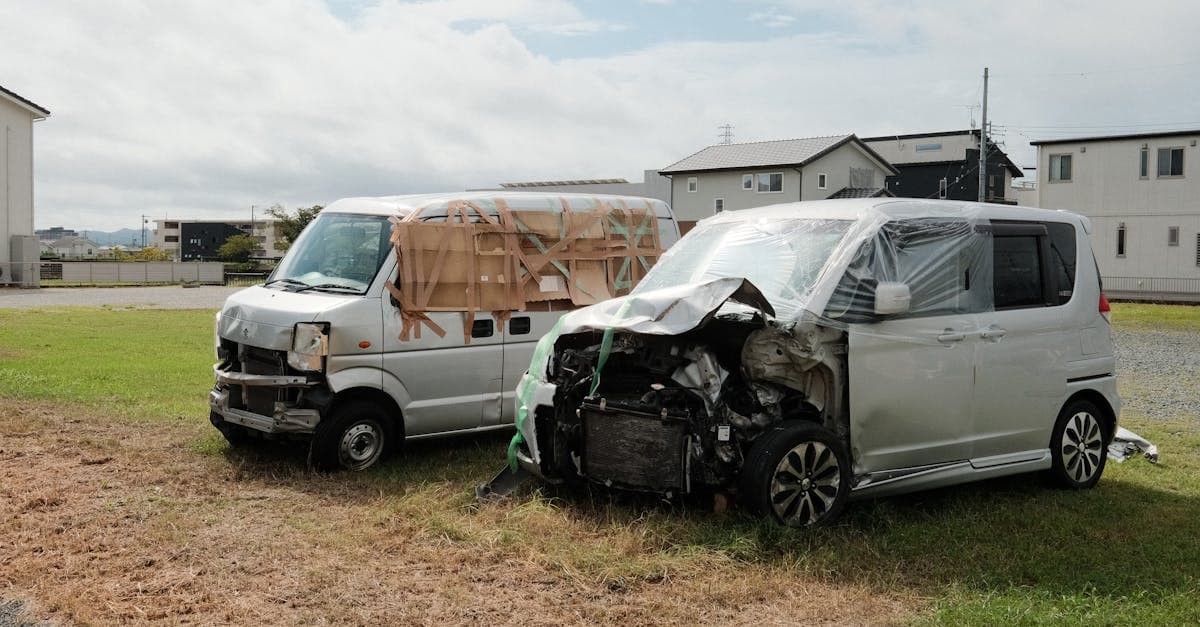
Let's talk about what happens to your car — and your wallet — when an accident occurs and how collision insurance steps in to help. Collision insurance is the compass that guides you through the wreckage back to solid ground — a coverage that pays for damage to your own vehicle when it collides with another vehicle or object, regardless of who is at fault.
This is an important distinction from liability insurance, which pays for damage you cause to others. Collision coverage looks inward — it protects your vehicle, your investment, and your ability to get where you need to go. When you hit a guardrail, rear-end another driver, or roll your vehicle in a ditch, collision coverage pays for the repairs or replacement.
The coverage works through a straightforward mechanism. You choose a deductible when you set up the policy — typically $250, $500, or $1,000. When you file a collision claim, you pay the deductible amount and your insurer covers the rest, up to your vehicle's actual cash value. If repairs cost less than your deductible, the claim is not worth filing.
Collision insurance is not required by state law, but virtually every auto lender and lease company requires it as a condition of financing. Even if you own your vehicle outright, collision coverage provides financial protection that most drivers find valuable — especially for newer vehicles where repair or replacement costs can easily reach thousands or tens of thousands of dollars.
This guide covers everything about collision insurance: what it covers, what it excludes, how claims work, how premiums are calculated, and how to decide whether carrying it makes financial sense for your specific situation.
What Collision Insurance Actually Covers
Here is the thing though — Collision insurance is the compass that guides you through the wreckage back to solid ground. It specifically covers damage to your own vehicle resulting from impact with another vehicle or object. The scope is clearly defined and includes several common accident scenarios.
Vehicle-to-vehicle collisions are the most obvious covered event. Whether you rear-end another car, are hit at an intersection, or are sideswiped on the highway, collision coverage pays for your vehicle's repairs regardless of who is at fault. This applies to accidents with cars, trucks, motorcycles, and any other motor vehicle.
Single-vehicle accidents are equally covered. Hitting a guardrail, telephone pole, tree, curb, or any stationary object triggers collision coverage. Driving into a ditch, rolling your vehicle, or running off the road also qualifies. The key element is impact — your vehicle struck something.
Pothole and road debris damage that results from a collision event is covered. If you hit a pothole that damages your suspension or rim, collision coverage applies because your vehicle impacted an object. Similarly, striking debris on the roadway is a collision event.
Parking lot incidents including backing into posts, being hit by another vehicle while parked, and door-opening damage caused by your vehicle's motion fall under collision coverage. Parking lot claims are among the most frequently filed collision claims in the United States.
The common thread across all covered events is physical impact between your vehicle and another object or surface. If the damage results from something other than impact — such as theft, vandalism, fire, or weather — it falls under comprehensive coverage instead.
What Determines Your Collision Insurance Premium
Now, this is where it gets interesting. Your collision premium reflects the insurer's assessment of how likely you are to file a claim and how much that claim will cost. Understanding these factors is essential for managing what you pay for the navigational shield between an accident and financial ruin.
Vehicle make and model: The single biggest factor in collision premium pricing. Vehicles that are expensive to repair, frequently stolen for parts, or involved in more accidents cost more to insure. A luxury sedan costs significantly more to cover than an economy car because parts and labor are more expensive.
Vehicle age and value: Newer, more valuable vehicles cost more to insure because the potential payout is higher. As your vehicle depreciates, your collision premium should decrease — though not always proportionally. Review your premium against your vehicle's current value annually.
Your driving record: Accident history is a strong predictor of future claims. Drivers with recent at-fault accidents pay substantially more for collision coverage — often 20 to 40 percent more. A clean record for three to five years typically restores preferred pricing.
Your deductible choice: As discussed, higher deductibles reduce premiums. This is the factor you have the most direct control over and the easiest lever for managing your collision cost.
Location: Urban areas with more traffic density, higher accident rates, and more expensive repair labor produce higher collision premiums than rural areas. Your ZIP code is a significant rating factor.
Credit-based insurance score: In most states, insurers use credit information as a rating factor. Drivers with higher credit scores statistically file fewer claims and receive lower collision premiums. Maintaining good credit indirectly reduces your insurance costs.
Collision Coverage and Hit-and-Run Accidents
So what does this mean for you? Hit-and-run accidents leave you without an identifiable at-fault driver to pursue for damages. In these frustrating situations, your collision coverage becomes the navigational shield between an accident and financial ruin that ensures your vehicle gets repaired.
How collision applies: When a driver hits your vehicle and flees, you file a collision claim with your own insurer. You pay your deductible, and the insurer covers the repair costs up to your vehicle's actual cash value. Without collision coverage, you would bear the entire repair cost yourself.
Collision vs uninsured motorist property damage: Some states offer uninsured motorist property damage (UMPD) coverage that may also apply to hit-and-run scenarios. In states where UMPD covers hit-and-runs, you might file under UMPD instead of collision — potentially with a lower deductible or no deductible at all. Check your state's rules and your policy terms.
Reporting requirements: File a police report immediately after discovering hit-and-run damage. Most insurers require a police report for hit-and-run claims, and the report creates an official record that supports your claim. Note the time, location, and any witness information.
Rate impact considerations: Hit-and-run claims filed under collision are typically treated as not-at-fault claims and should not increase your premium. However, claim frequency — regardless of fault — can sometimes affect your rates or your insurer's willingness to renew. Consider whether the damage exceeds your deductible by enough to justify filing.
Prevention and documentation: Dash cameras that record while parked can capture hit-and-run incidents. Parking in well-lit areas with security cameras increases the chance of identifying the responsible driver, which helps your insurer pursue subrogation.
How Your Credit Score Affects Collision Insurance
Here is the thing though — In most states, insurers use credit-based insurance scores as a factor in pricing collision coverage. Understanding this relationship helps you manage your total collision insurance cost.
What is a credit-based insurance score? It is a score derived from your credit history that correlates statistically with the likelihood of filing an insurance claim. It is not identical to your FICO credit score but uses similar underlying data — payment history, outstanding debt, length of credit history, and new credit inquiries.
How much does credit affect your collision premium? The impact is significant. Drivers with poor credit-based insurance scores may pay 40 to 100 percent more for collision coverage than drivers with excellent scores. In dollar terms, this can mean $200 to $500 more per year for identical collision coverage on the same vehicle.
States that prohibit credit-based pricing: California, Hawaii, Massachusetts, and Maryland prohibit or severely restrict the use of credit information in auto insurance pricing. If you live in one of these states, your credit score does not affect your collision premium.
Improving your insurance score: The same habits that improve your credit score improve your insurance score — paying bills on time, keeping credit card balances low, avoiding unnecessary new credit applications, and maintaining long-term credit accounts. These improvements can take six to twelve months to reflect in insurance pricing.
Shopping around matters more with lower credit. Credit-based insurance scores affect different insurers to different degrees. If your credit is less than excellent, comparing quotes from multiple insurers is especially important because the credit penalty varies significantly between companies.
How to Compare Collision Insurance Quotes Effectively
Now, this is where it gets interesting. Collision insurance premiums can vary by 30 to 50 percent between insurers for identical coverage. Effective comparison shopping requires looking beyond the headline premium to understand what you are actually getting.
Ensure identical coverage levels. When comparing quotes, verify that each quote has the same deductible, same vehicle information, and same driver details. A lower quote with a higher deductible is not a true comparison.
Compare claim service quality. A low premium means little if the claim experience is poor. Research each insurer's claim satisfaction ratings through J.D. Power, Consumer Reports, and state insurance department complaint databases. A responsive, fair claims process is worth a modest premium difference.
Evaluate the repair network. Insurers with strong direct repair programs offer streamlined claim experiences and guaranteed repairs. Ask about the number and quality of preferred shops in your area. A limited repair network can mean longer wait times and more inconvenience after an accident.
Ask about OEM parts policies. Some insurers specify aftermarket parts on collision repairs to reduce costs. If OEM parts matter to you — especially for newer vehicles — ask each insurer about their parts policy and whether you can request OEM parts.
Factor in available discounts. Each insurer offers different discount combinations. One insurer may offer a better base rate while another offers superior multi-policy, safe driver, or safety feature discounts. Calculate the total premium after all applicable discounts for the most accurate comparison.
Check rate stability history. An insurer with low rates today but a history of large annual increases may cost more over three to five years than one with slightly higher but stable rates. Ask about recent rate change history or check your state's insurance department for filed rate information.
How Fault Affects Your Collision Claim
Now, this is where it gets interesting. One of the most important features of collision insurance is that it pays regardless of who caused the accident. Whether you are at fault, the other driver is at fault, or fault is shared, your collision coverage repairs your vehicle.
At-fault accidents: When you cause the collision, your collision coverage is the only way to pay for your vehicle repairs. The other driver's liability insurance covers their vehicle and injuries, not yours. Without collision coverage, you absorb the full repair cost yourself.
Not-at-fault accidents: When another driver causes the collision, you have two options. You can file under the other driver's liability insurance and pay no deductible — but this process can take weeks or months while fault is investigated. Or you can file under your own collision coverage, pay your deductible, get repairs started immediately, and let your insurer pursue the at-fault driver through subrogation to recover costs.
Shared fault scenarios: In states that use comparative negligence, fault is divided between drivers. If you are 30 percent at fault, you can recover 70 percent of your damages from the other driver's liability insurance. Your collision coverage fills the remaining gap, minus your deductible.
Fault and premium impact: While collision coverage pays regardless of fault, at-fault claims typically increase your premium at renewal by 20 to 40 percent. Not-at-fault claims generally do not increase your rate, though policies vary. This distinction makes fault determination financially significant even when collision coverage applies either way.
The strategic advantage of collision coverage: Having your own collision coverage gives you negotiating leverage and timeline control. You are not dependent on the other driver being insured, cooperative, or honest about the accident circumstances.
Take Action on Your Collision Coverage Today
Collision insurance is the navigational shield between an accident and financial ruin that deserves active management, not passive acceptance. Here are the steps to take right now to ensure your collision coverage is optimized for your situation.
Review your current deductible. Is it the right balance between premium savings and out-of-pocket affordability? If your savings have grown since you last set it, consider raising it to reduce your premium. If your financial situation has tightened, consider whether a lower deductible provides needed security.
Check your vehicle's current value. Compare your vehicle's actual cash value to your annual collision premium. If the premium exceeds 10 percent of the vehicle's value, evaluate whether continuing collision coverage makes financial sense.
Verify your lender requirements. If you have a loan or lease, confirm the exact collision coverage and deductible requirements. Ensure you are meeting them without over-insuring.
Shop your rate. If you have not compared collision quotes in the past two years, you may be overpaying. Get three to five quotes and compare total cost after applicable discounts. Collision premium variation between insurers is significant, and loyalty does not always earn the best rate.
These steps take less than an hour and can save you hundreds of dollars annually while ensuring your collision coverage genuinely protects your vehicle and your finances.
Continue reading

How to Compare Insurance Quotes the Right Way: A Complete Guide
Comparing insurance quotes on price alone is a common and costly mistake. This guide walks through every element you should evaluate to find the policy that delivers the best value for your specific situation.
When Should You Get a Policy Checkup? A Complete Timing Guide
Your insurance needs change as your life changes. A policy checkup ensures your coverage keeps pace with new risks, assets, and responsibilities. This guide explains when and how to review your policies.

What Is Assignment of Benefits in Insurance? A Complete Guide
Assignment of benefits lets you transfer your insurance claim rights to a third party like a contractor. This guide explains how AOB works, when it helps, and when it can backfire.