Replacement Cost Explained: What It Means for Your Insurance Policy

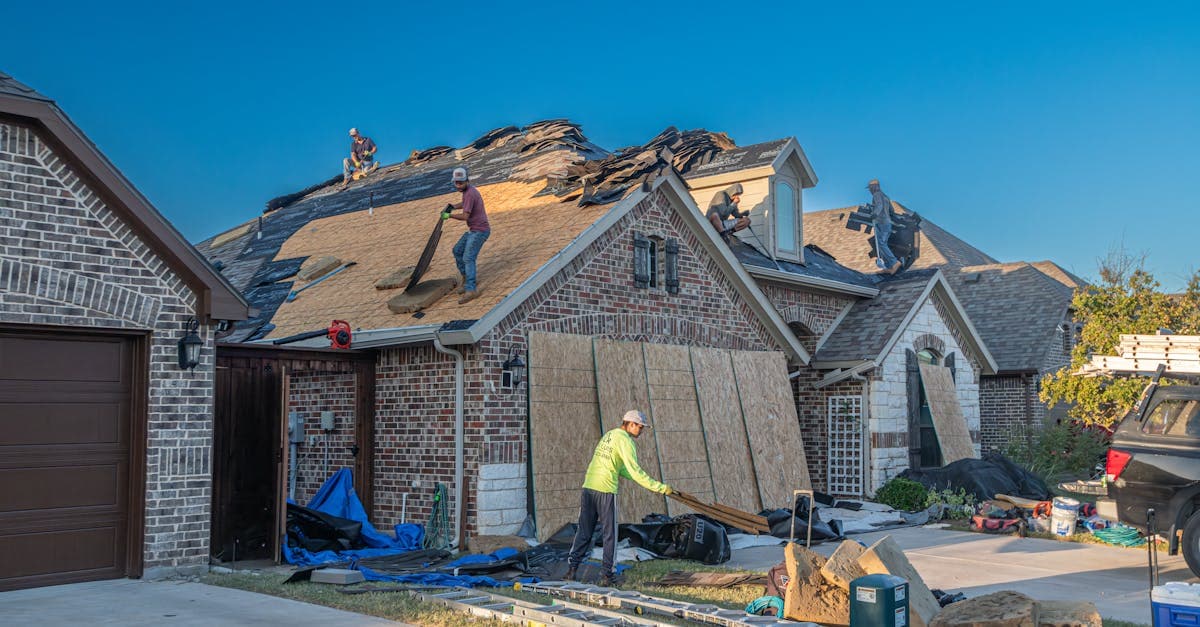
Let's talk about one of the most important concepts in property insurance — replacement cost. In insurance terms, replacement cost is the compass that points to what it truly costs to rebuild — the dollar amount needed to replace or rebuild your damaged property with materials of similar kind and quality, without deducting for depreciation.
This concept stands in contrast to actual cash value, which reduces the payout by the amount your property has depreciated since it was new. A five-year-old roof might cost $15,000 to replace, but its actual cash value — factoring in five years of wear — might be only $10,000. Under replacement cost coverage, you receive the full $15,000. Under actual cash value, you receive $10,000.
The distinction matters enormously at claim time. For a total home loss, the gap between replacement cost and actual cash value can reach six figures. For personal property, the cumulative depreciation on furniture, electronics, appliances, and clothing often reduces an ACV payout to a fraction of what it costs to replace everything.
Replacement cost coverage represents the true north of your property's worth at today's prices. It is the insurance industry's commitment to making you whole — restoring you to the same position you occupied before the loss, not a diminished version of it. This principle is why replacement cost has become the standard for modern property insurance, even though it costs more than actual cash value coverage.
Understanding how replacement cost works, how insurers calculate it, and how it applies during a claim empowers you to verify your coverage, challenge low estimates, and ensure that your policy truly protects what you have built.
What Is Replacement Cost?
Here is the thing though — Replacement cost is the compass that points to what it truly costs to rebuild. In insurance, it is defined as the amount of money required to replace or rebuild damaged property with materials of similar kind and quality, at current prices, without deduction for depreciation.
The core principle: Replacement cost coverage is designed to make you whole. If a fire destroys your kitchen, replacement cost pays what it actually costs to restore that kitchen to its pre-loss condition — new cabinets, new countertops, new appliances — regardless of how old the originals were.
What replacement cost includes: For a dwelling, replacement cost includes materials, labor, contractor overhead, and profit margins at current market rates. For personal property, it includes the current retail price of new items that are functionally equivalent to what was lost.
What replacement cost excludes: Replacement cost does not include land value, since the land is not destroyed in a covered loss. It does not include the cost of upgrades or improvements beyond the pre-loss condition. And in most policies, it does not include code-required upgrades unless you have ordinance or law coverage.
The practical impact: On a typical home, the difference between replacement cost and actual cash value coverage grows larger every year as the home and its contents age. A 15-year-old home with original systems, appliances, and finishes might have an ACV 30 to 40 percent below its replacement cost. That gap represents the money you would need to contribute from your own savings to fully restore the home under an ACV policy.
Replacement cost is the standard for dwelling coverage on most modern homeowners policies, but many policies still default to actual cash value for personal property. Checking your policy provisions for both is essential.
Guaranteed Replacement Cost: The Ultimate Protection
Now, this is where it gets interesting. Guaranteed replacement cost coverage is the gold standard of dwelling protection. It pays whatever it costs to rebuild your home, even if the actual cost exceeds your policy limit by any amount.
How it works: Under a guaranteed replacement cost provision, the insurer commits to rebuilding your home to its pre-loss condition regardless of cost. If your dwelling limit is $300,000 but rebuilding actually costs $450,000 due to unexpected complications, code requirements, or cost increases, the insurer pays the full $450,000.
Why it is rare: Guaranteed replacement cost exposes insurers to unlimited liability on dwelling claims. After major disasters where costs can spike unpredictably, this exposure can be enormous. As a result, most insurers stopped offering guaranteed replacement cost for new policies, particularly in catastrophe-prone areas.
Where to find it: Some high-value home insurers — Chubb, PURE, AIG Private Client — still offer guaranteed replacement cost. A few standard market carriers offer it in low-risk areas. Your independent agent can help you identify carriers that still provide this coverage.
Requirements: Insurers that offer guaranteed replacement cost typically require a professional appraisal, accurate reporting of home features and square footage, notification of any renovations or additions, and maintaining coverage at a specified percentage of the estimated replacement cost.
Cost: Guaranteed replacement cost endorsements are more expensive than extended RC, typically adding 5 to 15 percent to the dwelling premium. For the protection it provides, many homeowners consider this a reasonable cost.
Alternative: If guaranteed replacement cost is unavailable, extended replacement cost at 150 percent of your dwelling limit provides strong — though not unlimited — protection. Combine this with an accurate, up-to-date replacement cost estimate and annual reviews to minimize the risk of a significant coverage gap.
Replacement Cost and Coinsurance
So what does this mean for you? The coinsurance clause in your homeowners policy penalizes you if your coverage limit falls below a specified percentage of your home's replacement cost. Understanding this clause prevents a costly surprise at claim time.
How coinsurance works: Most homeowners policies require you to insure your dwelling to at least 80 percent of its replacement cost. If your coverage falls below this threshold, the insurer reduces your claim payment proportionally — even for partial losses that are well within your coverage limit.
The penalty calculation: If your home's replacement cost is $400,000 and the coinsurance requirement is 80 percent, you must carry at least $320,000 in dwelling coverage. If you carry only $240,000, your coverage ratio is $240,000 divided by $320,000, or 75 percent. A $50,000 claim would be paid at 75 percent: $37,500 minus your deductible, not the full $50,000 minus deductible.
Why underinsurance happens: Homeowners often become underinsured gradually. They set an adequate limit when they buy the policy but do not increase it as construction costs rise. After five to ten years of inflation without limit adjustments, the coverage ratio can drop below the coinsurance threshold without the homeowner realizing it.
How to avoid coinsurance penalties: Insure your dwelling to 100 percent of its current replacement cost — not 80 percent. This provides a margin above the coinsurance requirement and ensures full claim payments. Enable inflation guard endorsements to maintain this ratio over time.
Coinsurance in commercial insurance: Coinsurance clauses are even more common and strictly enforced in commercial property insurance. Business owners must be particularly vigilant about maintaining coverage at or above the coinsurance threshold.
Annual verification: At every renewal, verify that your dwelling limit still meets or exceeds 80 percent of current replacement cost. A simple per-square-foot calculation using local construction rates provides a quick check.
Ordinance or Law Coverage: When Standard Replacement Cost Falls Short
Here is the thing though — Standard replacement cost covers rebuilding to pre-loss condition. But when building codes have changed since your home was built, rebuilding to current code can cost significantly more. Ordinance or law coverage bridges this gap.
The three components: Ordinance or law coverage typically includes three types of protection. Coverage A pays for the loss of the undamaged portion of a building that must be demolished due to building code requirements. Coverage B pays for demolition costs. Coverage C pays for the increased cost of construction to meet current codes.
When it triggers: After a partial loss, local building departments may require that the undamaged portion of the home be brought up to current code — or demolished entirely if damage exceeds a threshold (often 50 percent of building value). Without ordinance coverage, you pay for these code-required changes yourself.
Cost impact examples: A home built in the 1970s suffers fire damage to 60 percent of the structure. The building department requires demolition of the remaining 40 percent and full reconstruction to current code. Additional costs include: demolition of undamaged portion ($15,000), electrical system upgrade ($12,000), plumbing code compliance ($8,000), structural engineering for current wind codes ($10,000), energy efficiency requirements ($5,000). Total additional cost: $50,000 — none of which is covered by standard replacement cost.
How much to carry: Ordinance or law coverage is typically offered as a percentage of your dwelling limit — 10, 25, or 50 percent. For older homes in jurisdictions with significantly updated building codes, 25 percent is a common recommendation. For very old homes, 50 percent may be appropriate.
Cost of the endorsement: Ordinance or law coverage is relatively inexpensive — typically $30 to $100 per year for 25 percent coverage on a standard homeowners policy. The protection it provides far exceeds the cost.
Replacement Cost and Your Mortgage
Now, this is where it gets interesting. Your mortgage lender has a financial interest in your home's replacement cost coverage. Understanding their requirements and how they interact with your claim helps you navigate the relationship.
Lender requirements: Most mortgage agreements require you to maintain dwelling coverage at the full replacement cost of the home. This protects the lender's collateral — if your home is destroyed, the insurance proceeds pay off the mortgage or fund rebuilding.
The mortgagee clause: Your homeowners policy includes a mortgagee clause that names your lender as an additional payee. For large claims, the insurer issues the check jointly to you and the lender. The lender then releases funds in stages as rebuilding progresses.
Escrow and coverage limits: If your mortgage includes an escrow account for insurance, your lender may periodically review your coverage limit to ensure it meets replacement cost requirements. If the lender determines your coverage is insufficient, they may require an increase or purchase force-placed insurance at a significantly higher cost.
Claim payment complications: When the insurer issues a joint check, you cannot simply deposit it and begin repairs. You must typically endorse the check with the lender and submit it for processing. Many lenders hold the funds and release them in draws based on construction progress, similar to a construction loan.
If you choose not to rebuild: If you decide not to rebuild after a total loss, most lenders require that the insurance proceeds first pay off the mortgage balance. Any remaining amount goes to you. Under a replacement cost policy, if you do not rebuild, you receive only ACV — which may or may not cover the mortgage balance.
Communication: Notify your lender promptly after any loss that triggers a claim. Understand their draw schedule and documentation requirements before construction begins. Delays in lender fund releases can stall rebuilding and create cash flow problems.
How Insurers Calculate Replacement Cost
So what does this mean for you? Insurance companies use sophisticated tools and data sources to estimate your home's replacement cost. Understanding their methodology helps you evaluate whether their estimate is accurate.
Estimation tools: Most insurers use proprietary replacement cost estimators, with the two most common being Marshall and Swift/CoreLogic and Verisk's 360Value. These tools calculate cost based on inputs including square footage, construction type, number of stories, roof material, interior finishes, geographic location, and local labor rates.
Data inputs: The accuracy of the estimate depends on the accuracy of the inputs. Common errors include incorrect square footage, missing finished basements, unrecorded renovations, and outdated construction quality assessments. If your insurer's records show a standard kitchen when you actually have a custom renovation, the replacement cost estimate will be too low.
Local cost adjustments: Replacement cost varies dramatically by location. Building in rural areas costs less than urban areas. Coastal construction is more expensive due to code requirements. High-demand markets after natural disasters experience cost surges of 20 to 50 percent.
What the estimate includes: A comprehensive replacement cost estimate should include demolition and debris removal, foundation work, framing and structural elements, roofing, exterior finishes, interior finishes, electrical and plumbing, HVAC systems, insulation, flooring, cabinetry, fixtures, and contractor overhead and profit.
What is often missed: Custom features, high-end finishes, specialty construction (log homes, adobe, historic materials), accessory dwelling units, and recent renovations are frequently undervalued or omitted from automated estimates.
Your role: You can improve the accuracy of your replacement cost estimate by providing your insurer with detailed information about your home's features, square footage, finishes, and any improvements. Some insurers offer or require professional appraisals for high-value properties. Taking the time to verify inputs leads to more accurate coverage.
Take Action on Your Replacement Cost Coverage Today
Understanding replacement cost is only valuable if you act on it. Here is what to do right now.
First, pull out your homeowners declarations page and check whether your dwelling coverage uses replacement cost or actual cash value. Then check your personal property coverage — many policies default to ACV for contents even when the dwelling has RC coverage. If your contents are on ACV, add the replacement cost endorsement.
Second, verify your dwelling coverage limit against current construction costs. Multiply your home's square footage by the per-square-foot construction rate for your area and quality level. If your limit is more than 10 percent below this estimate, increase it immediately.
Third, check whether you have extended replacement cost coverage. If not, add it — the 25 to 50 percent buffer protects against cost overruns that are increasingly common in today's construction market.
Your replacement cost coverage represents the true north of your property's worth at today's prices. Getting this number right is the most impactful single step you can take for your property insurance. The difference between a policyholder with accurate replacement cost coverage and one with an outdated estimate can be hundreds of thousands of dollars when disaster strikes. Take an hour this week, review your numbers, and make the necessary adjustments.
Continue reading

How to Compare Insurance Quotes the Right Way: A Complete Guide
Comparing insurance quotes on price alone is a common and costly mistake. This guide walks through every element you should evaluate to find the policy that delivers the best value for your specific situation.

When Should You Get a Policy Checkup? A Complete Timing Guide
Your insurance needs change as your life changes. A policy checkup ensures your coverage keeps pace with new risks, assets, and responsibilities. This guide explains when and how to review your policies.

What Is Assignment of Benefits in Insurance? A Complete Guide
Assignment of benefits lets you transfer your insurance claim rights to a third party like a contractor. This guide explains how AOB works, when it helps, and when it can backfire.